

Mastering constructive argumentation, a vital skill in conflict resolution, can transform disagreements into opportunities for personal and collective growth and understanding. Essential in various realms of life, from personal relationships to professional environments and public debates, the ability to engage in productive, conflict-resolving discussions is invaluable. This article presents crucial strategies and methods for effective constructive arguments, incorporating insights from psychology, communication studies, and the principles of conflict resolution.
- Understanding Constructive Arguments
- Establish a Foundation of Respect
- Listen Actively
- Top Rated Audio Books on Conflict Resolution
- Use “I” Statements
- Avoid Logical Fallacies
- Stay On Topic
- Validate Feelings and Perspectives
- Be Open to Being Wrong
- Seek Solutions, Not Victory
- Avoid Escalation and Abuse
- Take Timeouts if Necessary
- Consider External Help
- Conclusion
Understanding Constructive Arguments
A constructive argument is not about winning or proving the other person wrong. It’s about reaching a deeper understanding, resolving conflicts, and fostering respect and empathy. Unlike destructive arguments that often lead to resentment and a breakdown in communication, constructive arguments aim to find common ground and solutions that respect all parties involved.
RELATED ARTICLE: Deepen Your Valentine’s Connection: A Refresher on Love Languages
A constructive argument is not about winning or proving the other person wrong. It’s about reaching a deeper understanding, resolving conflicts, and fostering respect and empathy.

Establish a Foundation of Respect
Before diving into any argument, it’s essential to establish a foundation of respect. This means recognizing the other person’s humanity and worth, regardless of differences in opinion. Creating a respectful atmosphere ensures that both parties feel safe to express their views without fear of ridicule or belittlement.
Before diving into any argument, it’s essential to establish a foundation of respect. This means recognizing the other person’s humanity and worth, regardless of differences in opinion.
RELATED ARTICLE: Simple Ways to Spark Joy in Friends to Family
Listen Actively
Active listening is crucial. This involves fully concentrating, understanding, responding, and then remembering what is being said. It’s not just about waiting for your turn to speak but genuinely trying to understand the other person’s perspective. As noted in Psychology Today, active listening can help clarify different viewpoints and lead to more empathetic interactions
Top Rated Audio Books on Conflict Resolution

Audio Book
Fight Right: How Successful Couples Turn Conflict into Connection Audible Audiobook – Unabridged
Julie Schwartz Gottman PhD (Author), John Gottman PhD (Author), Roy Worley (Narrator), Kiiri Sandy (Narrator), & 1 more

Audio Book
The Arbinger Institute (Author), Kaleo Griffith (Narrator), Berrett-Koehler Publishers (Publisher)

Audio Book
Everybody Fights: So Why Not Get Better at It? Audible Audiobook – Unabridged
Kim Holderness (Author, Narrator), Penn Holderness (Author, Narrator), Thomas Nelson (Publisher)
AUDIO BOOK
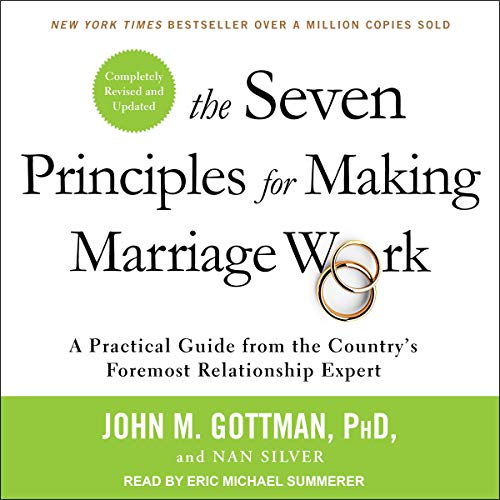
John M. Gottman PhD (Author), Nan Silver (Author), Eric Michael Summerer (Narrator), Tantor Audio (Publisher)

AUDIO BOOK
Getting to Yes: Negotiating Agreement Without Giving In Audible Audiobook – Unabridged
Roger Fisher (Author), William Ury (Author), Dennis Boutsikaris (Narrator), Simon & Schuster Audio (Publisher)
Use “I” Statements
Using “I” statements rather than “you” statements can prevent the other party from feeling attacked. This approach focuses on expressing your feelings and thoughts without placing blame. For instance, say “I feel upset when…” instead of “You make me upset by…”. This method is highlighted by experts as a way to take responsibility for one’s part in a conflict.
Avoid Logical Fallacies
Arguments should be based on facts and logic, not fallacies or emotional manipulations. Avoid ad hominem attacks, straw man arguments, and slippery slope fallacies, among others. Understanding and spotting logical fallacies can elevate the quality of the debate and lead to more productive outcomes.
Logical fallacies are errors in reasoning that undermine the logic of an argument. They often involve drawing conclusions from weak premises or using flawed reasoning, which can be unintentional or used manipulatively to persuade others. Here are some common types of logical fallacies with examples:
- Ad Hominem: Attacking the person making the argument, rather than the argument itself.
- Example: “You can’t believe anything John says about finance; he’s a high school dropout.”
- Straw Man: Misrepresenting someone’s argument to make it easier to attack.
- Example: “Person A: We should improve public healthcare. Person B: Person A wants to put all private healthcare companies out of business.”
- Appeal to Ignorance (Argumentum ad Ignorantiam): Arguing that a claim is true because it has not been proven false, or vice versa.
- Example: “No one has ever proved that extraterrestrial life doesn’t exist, so it must exist.”
- False Dilemma (False Dichotomy): Presenting two options as the only possibilities, when more options exist.
- Example: “You’re either with us or against us.”
- Slippery Slope: Arguing that a relatively small first step will lead to a chain of related events culminating in some significant effect.
- Example: “If we allow students to use calculators in exams, next they’ll be bringing computers, and then they’ll just stop studying.”
- Circular Reasoning (Begging the Question): An argument where the conclusion is included in the premise.
- Example: “The Bible is true, so you should not doubt the Word of God.”
- Hasty Generalization: Making a rushed conclusion without considering all of the variables.
- Example: “My father smoked his whole life and he never got lung cancer. Therefore, smoking doesn’t cause cancer.”
- Red Herring: Introducing an irrelevant topic to divert attention from the subject under discussion.
- Example: “We can’t worry about the environment, we’re in the middle of an economic crisis.”
- Appeal to Authority (Argumentum ad Verecundiam): Asserting that something must be true because it is believed by someone who is said to be an authority on the subject.
- Example: “This medication must be good for me, as it was recommended by a famous doctor.”
- Bandwagon Fallacy (Argumentum ad Populum): Concluding that a belief is true or an action is right because it is popular.
- Example: “Everyone is buying this phone, so it must be the best on the market.”
Recognizing these fallacies is important in developing critical thinking skills and engaging in rational, effective arguments.
Stay On Topic
Focus on the issue at hand. Bringing up unrelated past grievances can derail the argument and prevent a resolution. Stick to one topic at a time to ensure that the discussion is productive and relevant.
Validate Feelings and Perspectives
Recognize and validate the other person’s feelings and perspectives, even if you don’t agree with them. This doesn’t mean you are conceding your point, but it demonstrates empathy and understanding. Validating feelings can defuse tension and open the door to more constructive dialogue.

Recognize and validate the other person’s feelings and perspectives, even if you don’t agree with them. This doesn’t mean you are conceding your point, but it demonstrates empathy and understanding.
Validating feelings and perspectives is a crucial skill in effective communication, especially in conflict resolution and maintaining healthy relationships. Here’s how one can validate others’ feelings and perspectives:
- Acknowledge Their Feelings: Recognize and acknowledge the other person’s emotions without judgment.
- Example: “I can see that you’re really upset about this, and it’s understandable why you feel that way.”
- Show Empathy: Demonstrate understanding and empathy towards their emotional state.
- Example: “It sounds like you’re feeling really stressed about this situation, and that must be really hard for you.”
- Reflect Their Words: Repeat back what you’ve heard to show that you are listening and understanding their point of view.
- Example: “So, what I’m hearing is that you felt overlooked when your contributions weren’t acknowledged in the meeting.”
- Ask Clarifying Questions: Ask questions to understand their perspective better, without challenging them immediately.
- Example: “Can you tell me more about what happened? I want to understand your experience fully.”
- Avoid Minimizing Their Feelings: Do not dismiss or minimize their emotions, even if you don’t fully understand or agree with them.
- Example: “Your feelings are valid, even if the situation didn’t seem like a big deal to others.”
- Respect Their Perspective: Show respect for their viewpoint, acknowledging that their perspective is valid, even if it differs from yours.
- Example: “I appreciate you sharing your perspective with me; it’s helping me see things from a different angle.”
- Avoid Counterarguments Initially: Initially, avoid jumping in with a counterargument or a solution. Just focus on understanding and acknowledging their feelings.
- Example: “Before we discuss solutions, I just want to make sure I understand how you’re feeling about this.”
- Use Non-Verbal Cues: Use appropriate body language and tone of voice to convey your empathy and understanding.
- Example: Nodding while listening, maintaining eye contact, and using a compassionate tone.
- Affirm Their Experience: Affirm that their experience is real and significant to them.
- Example: “Your experience sounds really challenging, and it makes sense why you’d feel this way.”
- Avoid Judgmental Language: Use neutral language that doesn’t imply judgment or criticism.
- Example: “It seems like you’ve been dealing with a lot, rather than saying, “You shouldn’t let this bother you so much.”
Remember, validation doesn’t mean you agree with everything the other person says. It’s about acknowledging their emotional experience as real and significant.
Be Open to Being Wrong
Part of a constructive argument is being open to the possibility that you might be wrong or that there may be multiple valid perspectives. This openness fosters a learning environment where both parties can grow and adjust their viewpoints if necessary.
Seek Solutions, Not Victory
The goal of a constructive argument should be to find a resolution or a middle ground, not to “win” the argument. This mindset promotes cooperation and problem-solving rather than competition.

Avoid Escalation and Abuse
Never resort to verbal abuse, threats, or physical aggression. Such behaviors are destructive and can cause lasting damage to relationships. If the argument escalates to this level, it’s essential to take a step back and cool down.
Take Timeouts if Necessary
If emotions become too intense, it’s okay to take a break from the discussion. This can prevent saying things in the heat of the moment that might be regretted later. Taking timeouts allows both parties to calm down, collect their thoughts, and return to the discussion with a clearer perspective.

Consider External Help
In cases where arguments frequently become destructive or if the parties involved find it challenging to adhere to these rules, seeking help from a mediator or counselor might be beneficial. Professional guidance can provide new strategies and insights for handling disagreements constructively.
Conclusion
Constructive argumentation is a skill that requires practice and patience. By adhering to these rules, individuals can engage in meaningful and productive discussions, even in the face of disagreement. The key is to prioritize understanding, respect, and cooperation over the need to win an argument. In doing so, arguments can become a powerful tool for strengthening relationships and fostering mutual understanding.
 GOODIE LIVING